Real evidence from the MACI System.
This page does not replace MACI IV and does not reproduce the full book. It is a visual gateway into real cases: aquariums kept over time, with changes, pruning, fauna, biomass, continuity, and decisions that cannot be understood well from a single isolated photo.
The idea is not to copy these aquariums. The idea is to see what happens when a living system gains internal capacity and stops depending on constant rescues.
On the website you will find a summarized version of the cases. The complete development, with sequence, context, and editorial reading, belongs to MACI IV and the MACI books.
What you will see here
Aquariums with different volumes, different ages, and different problems, but with the same underlying question: what happens when the living base is not destroyed every time doubt appears.
Summarized case: 60 L aquarium
From April 2025 to January 2026
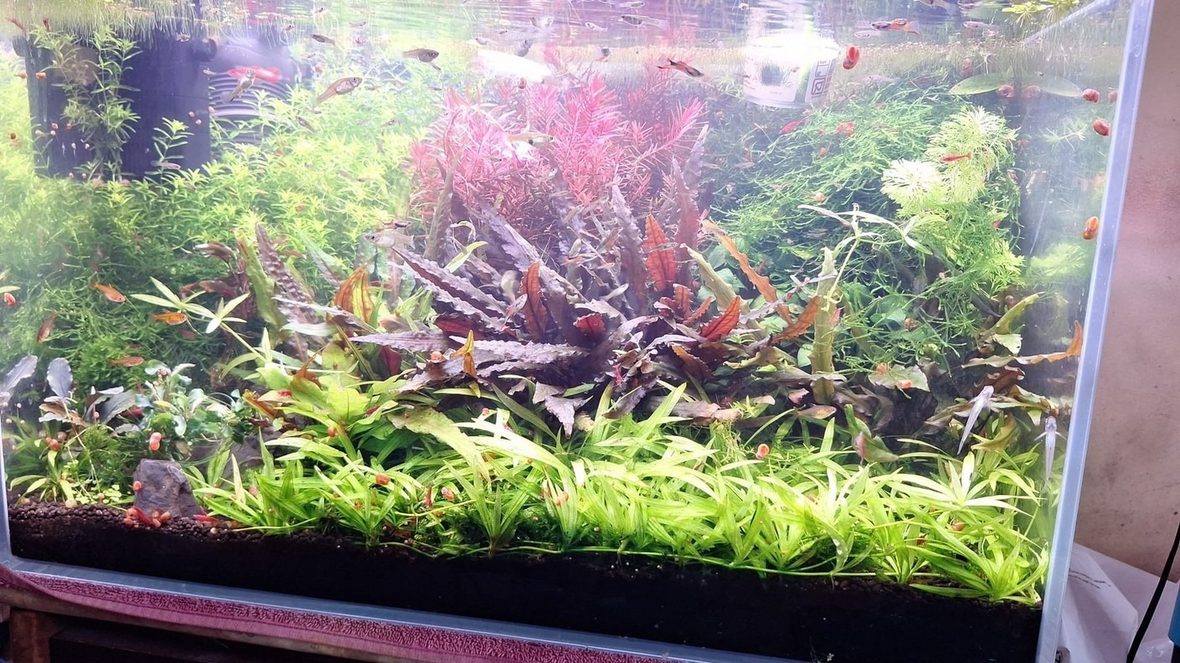
The 60 L is not presented as a perfect aquarium from day one. Its value is in the sequence: it begins with open spaces, separated plants, and a still young base, but never as an empty system.
As the months pass, pruning, plant changes, and fauna variations stop producing visible setbacks. The system does not restart every time something is touched: it continues.
What this case shows
- Real use from the beginning.
- Changes absorbed without visible collapse.
- Persistence as a property of the system, not as a pretty photo.
Summarized case: 180 L aquarium
Aquarium with high light and stable CO2
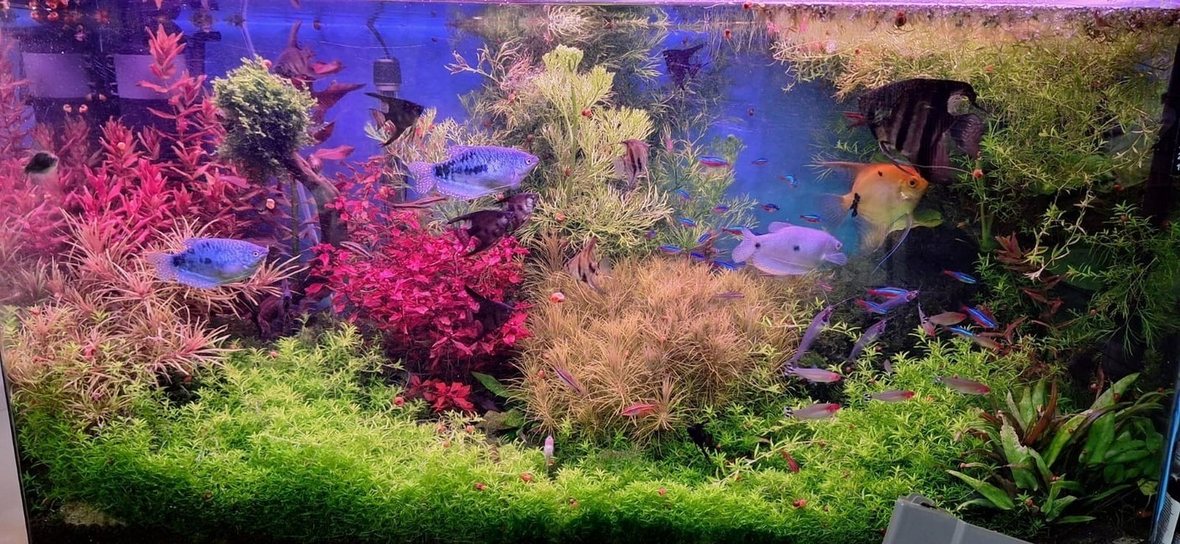
The 180 L serves as an immediate contrast: more volume, more fish, more plant mass, and a different reading of the system’s margin.
It is not used to say that technique does not matter. It is used to show that even with technology, the MACI reading remains in continuity, the biological base, and the system’s response.
What this case shows
- Functional plant mass.
- Continuity without deep corrective interventions.
- Technique can accompany the system, but it does not replace reading it.
Summarized case: 25 L aquarium
Stability after population changes
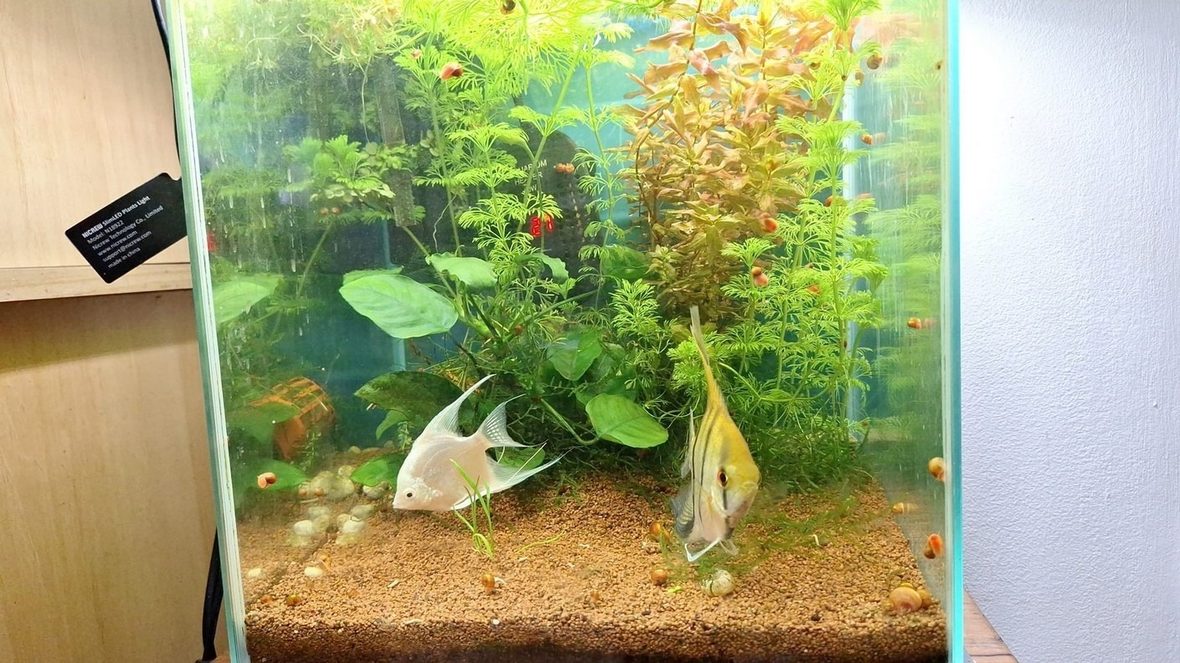
This aquarium is not included as a startup experiment, but as evidence of sustained stability after population changes and unplanned long-term decisions.
The fauna changes; the system remains. That distinction matters: not every change requires a restart, deep cleaning, or breaking the biological base.
What this case shows
- Small volume with real use.
- Fauna changes without restarting.
- Biological base preserved.
Summarized case: 38 L aquarium
More than four years of operation
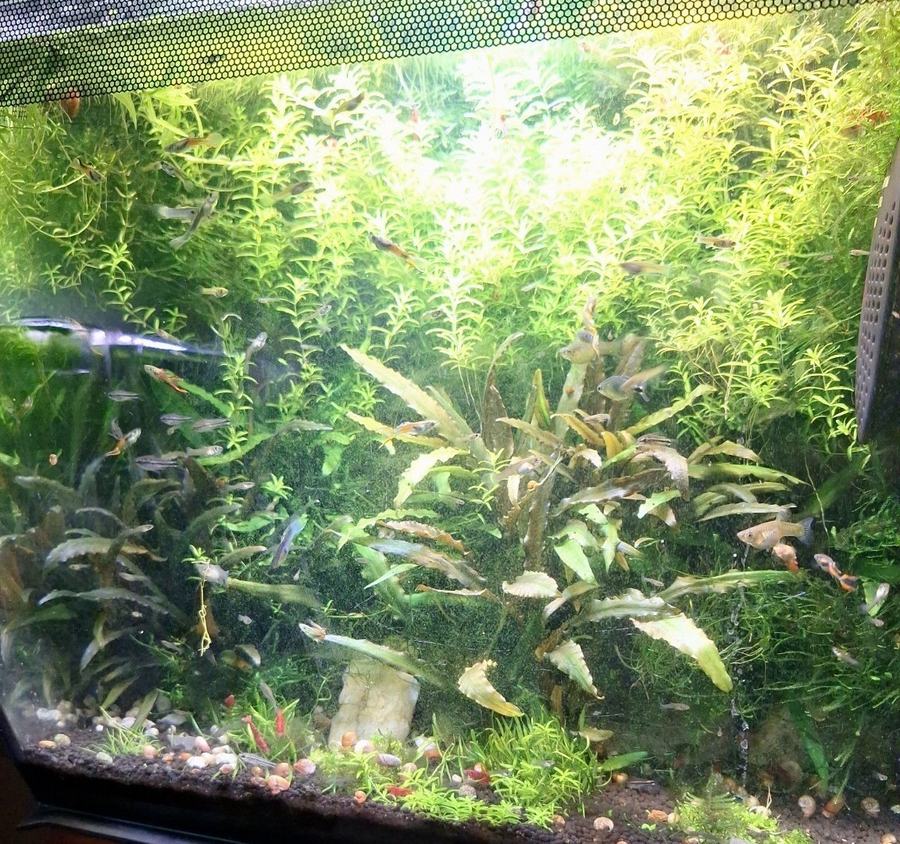
The 38 L shows something different: resilience under external disturbances. It is not an aquarium protected from everything, but a system with enough memory to absorb events without each incident destroying the base.
The reading is not about denying water changes or interventions. It is about knowing where to act and where not to break what supports the system.
What this case shows
- Mature system.
- Disturbances absorbed without destroying the living substrate.
- Localized intervention, not restarting out of fear.
Summarized case: 17 L aquarium
From day 1 to day 28
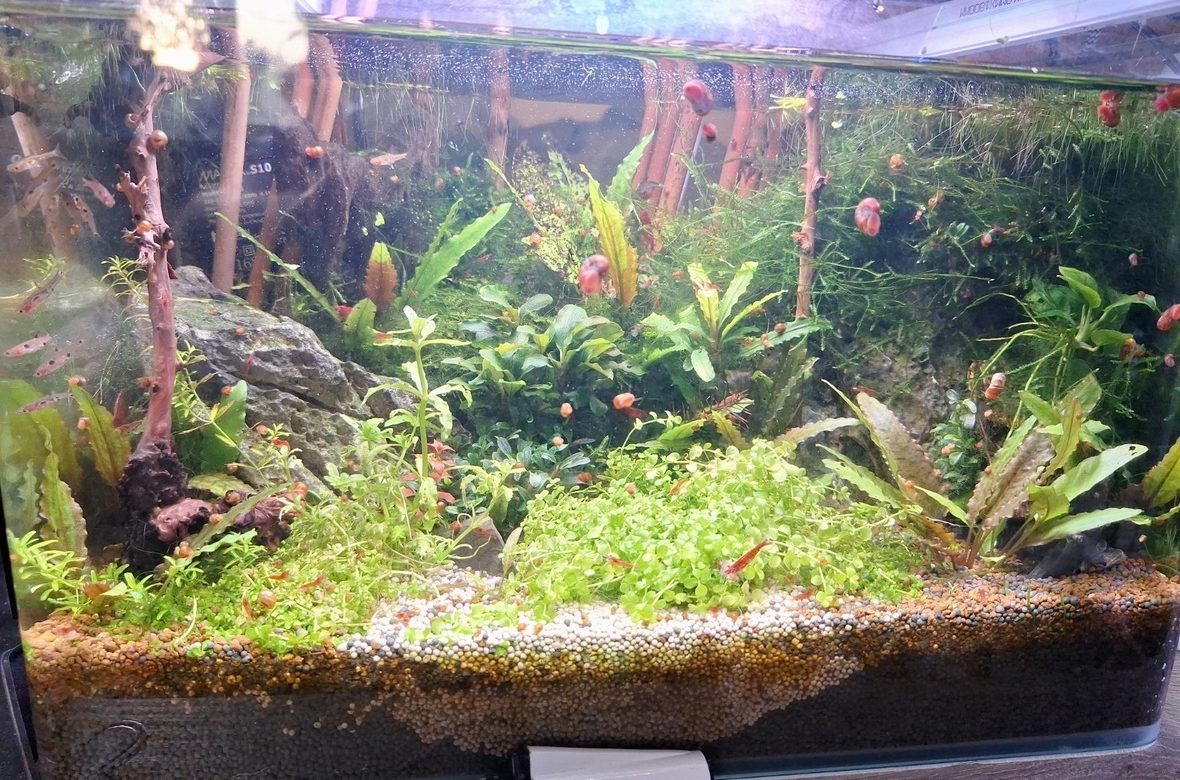
The 17 L is read through early continuity: surfaces that stop being inert, fauna using the space, and an evolution that does not depend on cleaning every uncomfortable sign.
The sequence is valuable because a startup is not understood only by appearance. It is understood by how the system starts building resource, response, and memory.
What this case shows
- Visible colonization.
- Active fauna in a young system.
- Values and behavior read in context, not as isolated alarms.
Summarized case: external 180 L evidence
MACI criteria applied outside the author’s own aquariums
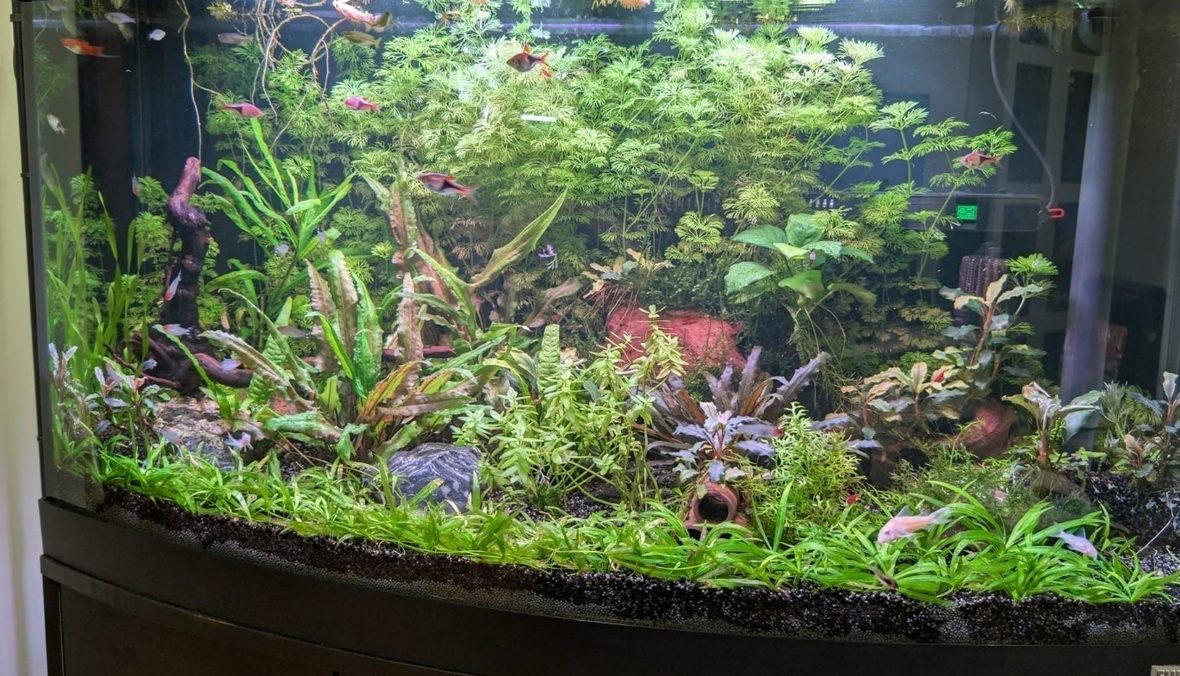
This case does not belong to one of the author’s aquariums. It is included because it shows transfer of criteria: someone coming from a problematic aquarium starts building differently.
The interest is not in presenting a quick victory, but in seeing a direction: settling, plant occupation, fauna using the space, and less need to correct every phase.
What this case shows
- Transferable criteria.
- Visible progression without turning the case into a recipe.
- Evidence outside the author’s direct control.
Where to continue
The website shows a summarized sample. The complete evolution, nuances, and documentary development belong to MACI IV and the MACI books.
See MACI books Spanish TikTok @sistemamaci English TikTok @systemmaci